' d='M777.45,250.6c-14.33-8.12-25.8-19.19-34.4-33.21-8.44-14.01-12.66-29.15-12.66-45.39s4.18-31.13,12.54-45.15c8.36-14.01,19.79-25.08,34.28-33.21,14.33-8.12,30.02-12.18,47.06-12.18s32.77,4.02,47.18,12.06c14.41,8.04,25.92,19.08,34.52,33.09,8.44,14.18,12.66,29.31,12.66,45.39s-4.22,31.38-12.66,45.39c-8.44,14.02-19.91,25.08-34.4,33.21-14.49,8.12-30.26,12.18-47.3,12.18s-32.49-4.06-46.82-12.18ZM796.32,123.51c-8.6,5.1-15.53,12.03-20.78,20.78-5.1,8.76-7.65,18-7.65,27.71s2.55,19.15,7.65,27.83c5.09,8.68,11.95,15.65,20.54,20.9,8.6,5.26,18,7.88,28.19,7.88s19.43-2.63,28.19-7.88c8.76-5.25,15.68-12.26,20.78-21.02,4.93-8.44,7.41-17.68,7.41-27.71s-2.51-19.11-7.53-27.71c-5.02-8.6-11.82-15.53-20.43-20.78-8.92-5.09-18.39-7.65-28.43-7.65s-19.35,2.55-27.95,7.65Z'/%3E%3Cpath fill='url(%23g2)' d='M971.05,246.51c-22.23-37.39-57.53-81.04-99.41-122.92-41.88-41.87-85.53-77.18-122.92-99.41-43.42-25.81-73.35-31-88.95-15.39-15.6,15.61-10.42,45.54,15.39,88.95,10.27,17.28,23.35,35.91,38.58,55.09-12.48-34.33-42.71-105.49-35.16-125.23.53-.53,2.11-1.08,4.98-1.08,7.34,0,23.15,3.63,51.58,20.53,35.55,21.13,77.35,55,117.7,95.36,40.37,40.37,74.22,82.16,95.36,117.7,23.54,39.57,21.33,54.68,19.44,56.55-1.87,1.88-16.99,4.1-56.55-19.43-21.7-12.9-45.72-30.54-70.33-51.51l-20.53,17.4c26.92,23.2,53.37,42.75,77.26,56.96,27.1,16.11,48.94,24.19,65.33,24.19,9.87,0,17.75-2.93,23.62-8.8,15.6-15.6,10.42-45.54-15.39-88.95Z'/%3E%3Cpath fill='url(%23g3)' d='M945.96,209.05c-5.28,7.23-12.34,13.08-20.56,16.93-18.43-25.16-41.47-51.97-67.37-78.31,4.97-7.5,11.79-13.63,19.79-17.83,26,26.52,49.25,53.6,68.14,79.22Z'/%3E%3Cpath fill='url(%23g4)' d='M986.45,8.79c-5.87-5.87-13.75-8.79-23.64-8.79-16.38,0-38.22,8.07-65.32,24.19-23.02,13.7-48.44,32.35-74.37,54.48,6.68,5.68,13.39,11.63,20.1,17.79,23.76-20.08,46.89-36.96,67.85-49.42,39.56-23.52,54.7-21.32,56.56-19.43,1.89,1.86,4.11,17-19.43,56.56-21.15,35.55-55.01,77.33-95.38,117.7-40.35,40.35-82.15,74.23-117.7,95.35-28.41,16.9-44.24,20.53-51.57,20.53-2.86,0-4.44-.55-4.97-1.1-7.54-19.72,22.68-90.89,35.14-125.22-15.23,19.17-28.29,37.79-38.56,55.08-25.83,43.43-31.01,73.34-15.4,88.96,15.59,15.61,45.53,10.43,88.96-15.4,37.39-22.23,81.03-57.54,122.91-99.39,41.88-41.88,77.19-85.54,99.41-122.93,25.81-43.4,30.99-73.34,15.4-88.96Z'/%3E%3C/svg%3E)


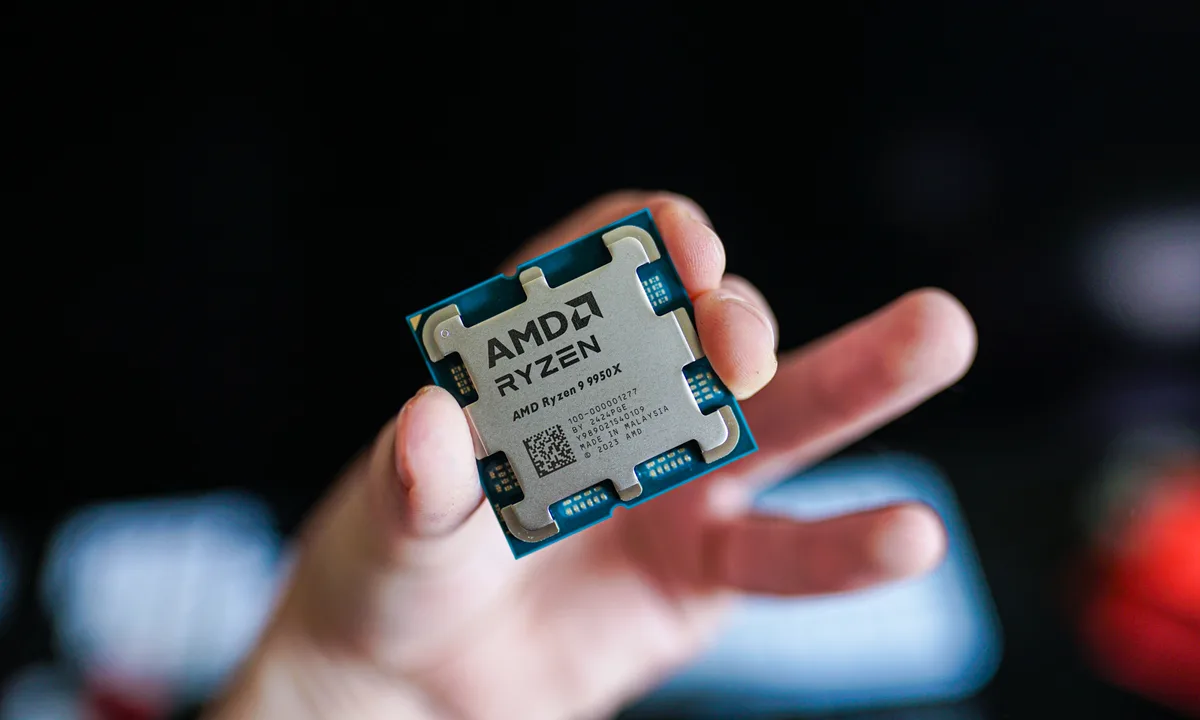
Ryzen 9 9950X vs Xeon for game servers: why a "gaming" chip beats "server-grade"
Most hosts still run Intel Xeon under your game server. For Minecraft, FiveM or Rust that is the wrong call — and the reasons have nothing to do with performance. We break down single-thread, tick rate and the real economics.
If your Minecraft world stutters when it fills up, or your FiveM server's frame time spikes at prime time, the culprit is almost always the same: the CPU underneath it. And there is a good chance it is an Intel Xeon — even though, for a game server, a desktop Ryzen 9 9950X runs circles around it.
That sounds backwards. Xeon is "server-grade", Ryzen 9 is a "gaming" chip. So why is the gaming chip the right tool, and why do so many hosts still ship Xeon? Let's settle it.
Game servers live and die on one thing: single-thread
Almost every game server simulates its world on a single main thread. The Minecraft tick, the FiveM/CitizenFX main loop, the Source engine, most Rust logic — they run one tick after another, and that tick has to finish in time (Minecraft: 50 ms for 20 TPS). If one core can not crunch that tick fast enough you get lag — and throwing more cores at it does not help, because the work can not be split.
So the only number that matters is per-core performance: clock speed × IPC (instructions per clock). And that is exactly where modern Ryzen humiliates most Xeons.
The numbers
- Clock: a Ryzen 9 9950X boosts to 5.7 GHz. A typical datacenter Xeon (Gold/Silver, or an off-lease E5/Scalable) cruises at 2.1–3.2 GHz base, because it is built to run 20–40 cores within a power budget, not to sprint on one.
- IPC / architecture: Zen 5 is several generations ahead of the Broadwell/Skylake-era Xeons still common in budget hosting. More work per clock, on top of a far higher clock.
- Cache: the X3D parts (7950X3D, 9950X3D) stack extra L3 right where game logic loves it — tick times drop again.
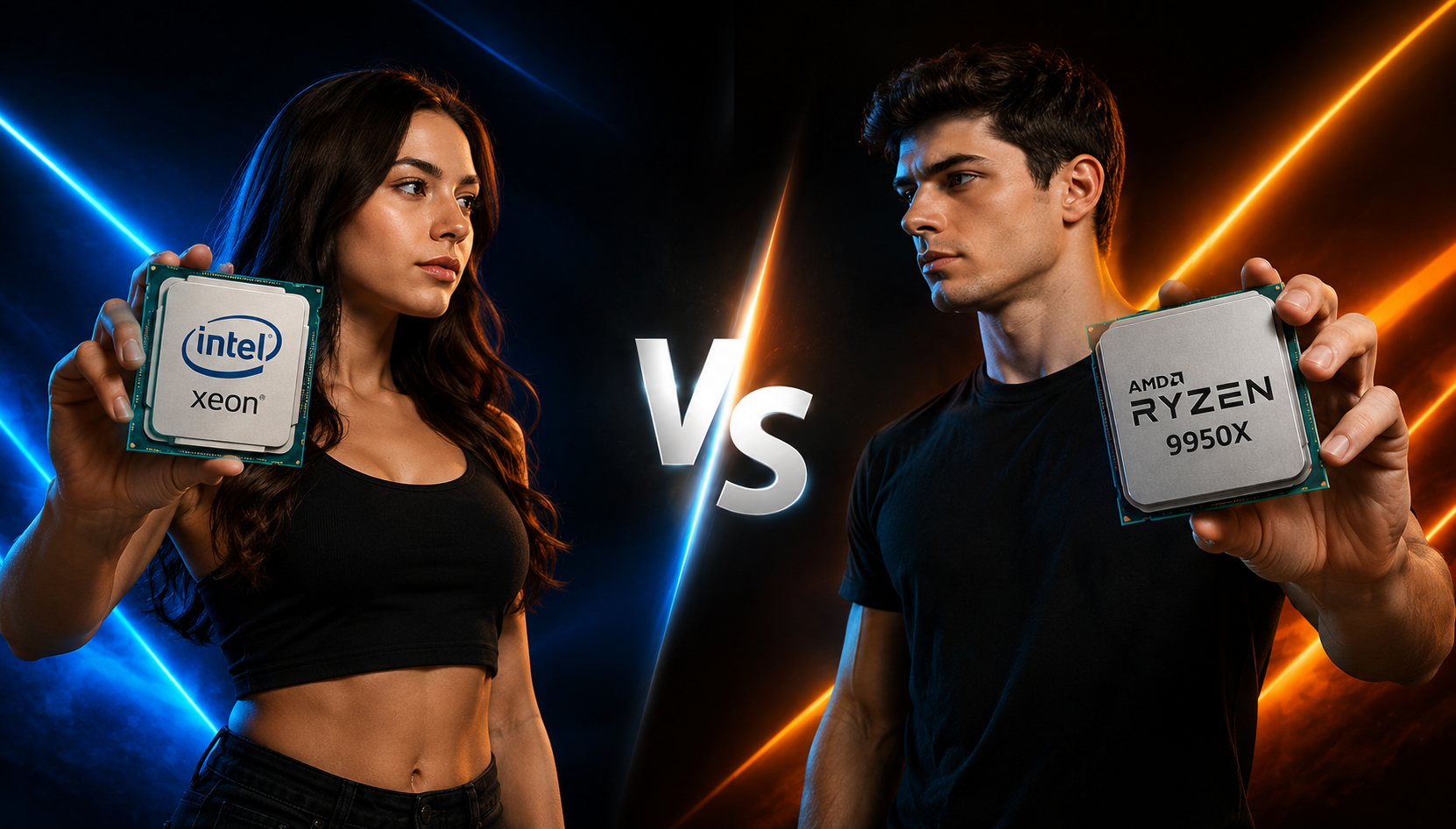
Net result on a single game-server tick, a Ryzen 9 9950X is commonly 50–100% faster than the Xeons hosts put under entry and mid-tier game plans. Same player count, half the frame time.
For a game server, "more cores" is marketing. "Faster cores" is what keeps your tick rate stable when the map fills with players.
So why do so many hosts use Xeon anyway?
Not because it is faster. Because of everything around the chip:
- It is cheap on the used market. Datacenters retire Xeon servers by the rack. Off-lease dual-Xeon nodes with 256 GB of RAM sell for a fraction of new hardware. A host buys them in bulk and oversells cores — great margins, mediocre tick rate.
- RAM capacity and channels. Xeon/EPYC platforms take huge amounts of registered ECC RAM (hundreds of GB, 8+ channels). If your business is packing many small VMs onto one box, that density matters more than single-core speed.
- ECC and "server certification". Server boards, IPMI/remote management, validated RDIMMs, dual-socket — the enterprise checklist. Ryzen is officially a consumer platform: no vendor-certified server boards from the big OEMs, fewer datacenter options.
- Reliability theatre. "Enterprise Xeon" sells trust. It looks right on a spec sheet even when, for a single-threaded game tick, it is the slower choice.
Every one of those reasons is about the host's cost and logistics — not about your players' experience. Density and RAM capacity are real engineering wins for some workloads. A game server is not one of them.
Where Xeon (and EPYC) genuinely win
To be fair: server silicon is not pointless. If you need terabytes of ECC RAM, hundreds of cores for parallel batch/render/database work, PCIe lanes for dozens of NVMe drives, or hardware you can RMA on a 4-hour SLA — that is Xeon/EPYC territory, and consumer Ryzen can not match it. For databases, virtualization farms and heavy multi-threaded compute, "more cores + more RAM + ECC" is the right answer.
The mistake is dragging that logic into game hosting, where the workload is the opposite shape.
What Fusiora runs — and why
We pick the CPU to fit the workload, not the spec sheet. Our game and VPS nodes run AMD Ryzen 9 9950X (Zen 5, up to 5.7 GHz), 7950X3D with stacked 3D V-Cache, and 5900X — paired with DDR5, NVMe Gen5 and our own L4/L7 DDoS protection. For a Minecraft, FiveM or Rust server, that combination means one thing your players actually feel: a tick rate that stays flat when the server fills up.
If you are on a Xeon plan somewhere and your server chokes at peak, it is probably not your config. It is the cores. Spin one up on Ryzen and feel the difference.
Was this article helpful?
Be the first to rate it